
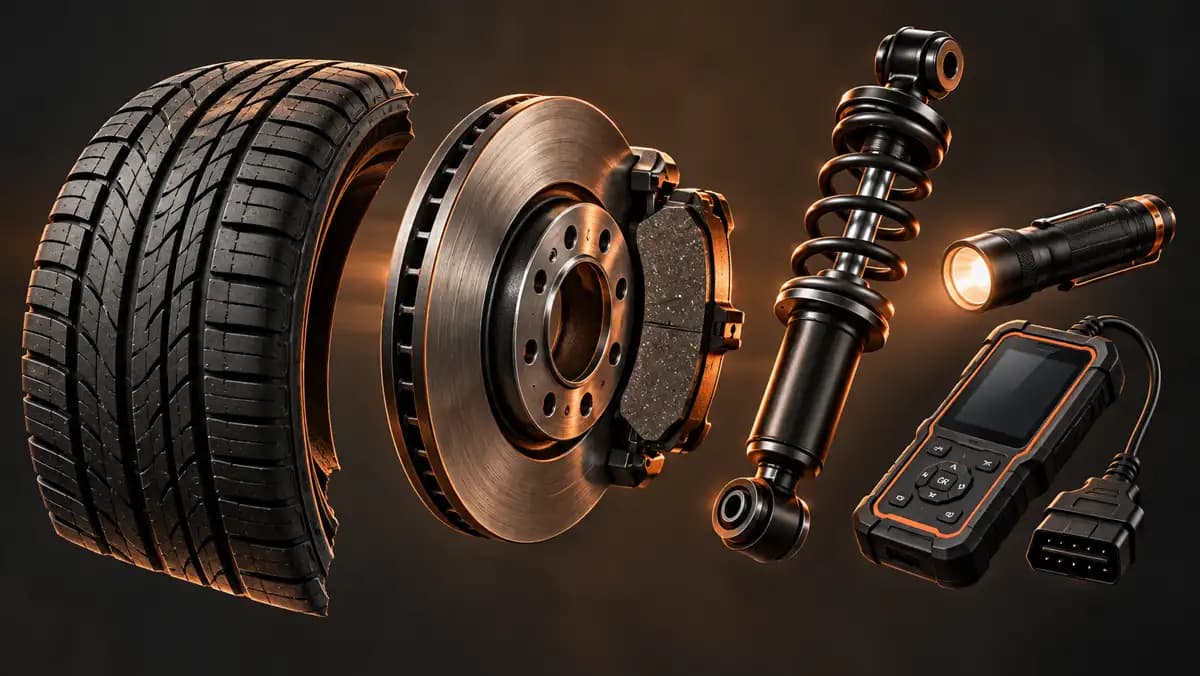
A used car can be freshly detailed while hiding expensive mechanical, electrical, or structural problems. A useful inspection is a sequence: verify identity and history, observe the car before it is warmed up, inspect it physically, scan it, and then drive it under several conditions.
Start before the engine starts
Confirm the vehicle identification number matches the documents and visible labels. Check open safety recalls using the official service for the market. Review maintenance records, ownership history, mileage consistency, and evidence of collision repair or flood exposure.
Ask to see the vehicle cold. A pre-warmed engine can conceal difficult starting, timing noise, smoke, weak battery performance, or an unstable cold idle.
Inspect the whole car, not only the engine bay
Look underneath for leaks, corrosion, damaged lifting points, and fresh coatings that may hide repairs. Check tire brand, size, age, tread pattern, and uneven wear. Compare panel gaps and paint texture, inspect glass dates where relevant, and test every electrical function.
Fluid condition can provide clues, but one color or smell rarely proves the condition of a component. Correct level, visible contamination, leaks, service history, and operating behavior matter together.
Scan before codes are cleared
A diagnostic scan should include all available modules, not just the engine controller. Look for stored, pending, and permanent faults, readiness-monitor status, freeze-frame data, module communication problems, and implausible mileage or voltage history where supported.
Many incomplete readiness monitors can mean the battery was disconnected or codes were recently cleared. It is not proof of deception, but it is a reason to ask why and to avoid assuming an empty code list means a fault-free car.
Make the road test deliberate
Test low-speed steering, braking, parking maneuvers, steady cruising, moderate acceleration, and several transmission shifts. Listen with the audio system off. Watch temperature behavior and check whether warning lights complete their normal self-test when the ignition is switched on.
Pay for independence
For a meaningful purchase, an inspection by a technician who is independent of the seller is usually inexpensive compared with one hidden engine, transmission, battery, or structural repair. No checklist eliminates risk, but combining physical evidence, electronic data, history, and road behavior makes the decision far less dependent on appearance.
Sources and further reading
General educational guide
For information, not a diagnosis or repair instruction. Vehicle-specific checks are still required. Consult the manufacturer's guidance and a qualified technician.
How to use this information
This article explains general principles and does not establish what is wrong with your vehicle. Illustrations are conceptual. Read the content limitations.
Content and reuse
An AI-assisted educational explanation prepared for AI4Car. References provide factual context; linking to a publication does not grant a license to its text or images or imply its author’s endorsement. No Creative Commons license is asserted for those third-party materials.
Illustration: AI-generated for AI4Car; a generic conceptual view, not a photograph of the reported vehicle or a manufacturer’s diagram. Content and licensing policy.
Was this useful?
Discussion
Share what you checked, what changed, and which vehicle you drive. Up to 10 comments and replies per account in 24 hours.
Loading discussion…