
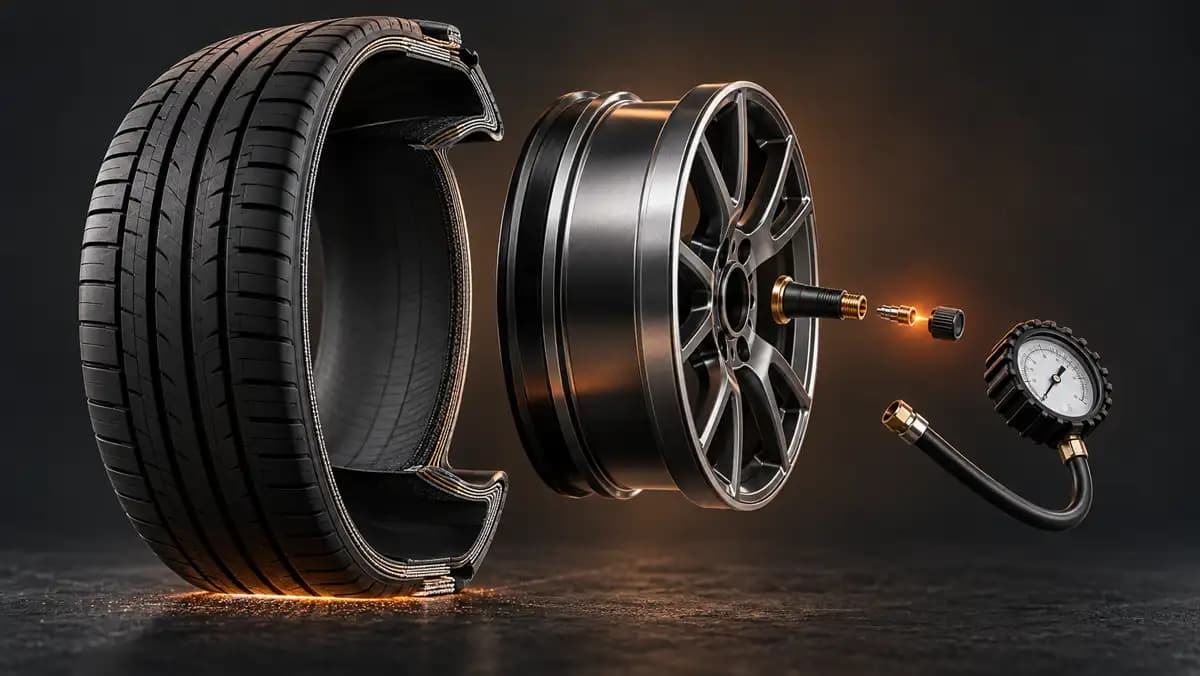
A tire's sidewall contains a great deal of information, including a maximum permissible pressure. That is not normally the target pressure for your car. The vehicle manufacturer chooses the recommended cold pressures according to vehicle weight, axle loading, tire size, handling, and ride requirements.
Where to find the correct value
Look for the tire placard on the driver's door opening, door pillar, fuel flap, or another location specified by the manufacturer. The owner's manual carries the same information and may list different pressures for heavy loads or sustained high-speed use.
Front and rear pressures are not always equal. Follow the vehicle placard rather than copying the number from another car or inflating every tire to the sidewall maximum.
“Cold” describes the tire, not the weather
A cold pressure is measured before the car has been driven significantly, typically after it has been parked for several hours. Driving flexes and warms the tire, which raises pressure. Releasing air from a warm tire to match the cold target can leave it underinflated after it cools.
Temperature changes also matter. A pressure warning on the first cold morning of the season may reflect a real reduction across all four tires, not a sensor failure.
What TPMS can and cannot tell you
The Tire Pressure Monitoring System is a warning system, not a replacement for routine checks. Depending on the vehicle, it may use pressure sensors inside the wheels or infer a difference through wheel-speed data.
A warning can indicate:
- One tire losing air from a puncture, valve, or bead leak.
- Several tires becoming low as ambient temperature falls.
- A damaged or unprogrammed sensor after tire service.
- A temporary system fault, often shown by a flashing warning before it remains on.
A better monthly check
Measure all four tires when cold, include the spare where applicable, inspect the tread and sidewalls, and replace missing valve caps. If one tire repeatedly loses pressure, find the leak instead of making inflation a weekly routine.
Correct pressure supports load capacity, steering response, braking, tire life, and energy efficiency. It is a small measurement with consequences across the whole vehicle.
Sources and further reading
General educational guide
For information, not a diagnosis or repair instruction. Vehicle-specific checks are still required. Consult the manufacturer's guidance and a qualified technician.
How to use this information
This article explains general principles and does not establish what is wrong with your vehicle. Illustrations are conceptual. Read the content limitations.
Content and reuse
An AI-assisted educational explanation prepared for AI4Car. References provide factual context; linking to a publication does not grant a license to its text or images or imply its author’s endorsement. No Creative Commons license is asserted for those third-party materials.
Illustration: AI-generated for AI4Car; a generic conceptual view, not a photograph of the reported vehicle or a manufacturer’s diagram. Content and licensing policy.
Was this useful?
Discussion
Share what you checked, what changed, and which vehicle you drive. Up to 10 comments and replies per account in 24 hours.
Loading discussion…