
The pattern
In a discussion about a 2010 Mazda 3, the owner reported rising temperature at idle and in slow traffic. The temperature was steadier at road speed; the fan worked when air conditioning was switched on, but did not appear to respond to rising engine temperature. The owner had already changed the thermostat and coolant. The thread does not confirm a final fix.
Why speed changes the picture
At road speed, air passes through the radiator without much help from the fan. At a standstill the fan and its controls matter more. Engine speed can also affect coolant flow, so a change with RPM is a clue rather than a complete diagnosis.
Checks that separate the possibilities
- If the gauge enters the hot range or a temperature warning appears, stop safely and let the engine cool. Do not open a hot cooling system.
- Check coolant level only when cold and look for obvious leaks or blocked radiator fins.
- Observe whether the fan comes on under the conditions specified for that exact car. A fan that runs with A/C still needs its temperature-control path checked.
- A technician can compare scanner coolant temperature with the gauge and test fan commands, fuses, wiring and circulation as appropriate.
The takeaway
The discussion focuses on fan control first, while another answer raises coolant circulation. Both remain hypotheses until measured. Replacing another component simply because the car overheats would skip the evidence the owner has already collected.
Community discussion · outcome not verified
For information, not a diagnosis or repair instruction. A reported result may not apply to your car. Consult the manufacturer's guidance and a qualified technician.
How to use this information
This is an editorial interpretation of a public discussion. Replies, votes and an accepted answer do not prove a diagnosis. An author-reported finding or repair has not been independently verified by AI4Car. Illustrations are conceptual. Read the content limitations.
Credits & reuse
AI-assisted adaptation by AI4Car of the contributions below on Motor Vehicle Maintenance & Repair Stack Exchange. We shortened and reorganized the discussion, paraphrased its text and added educational context. These are reported experiences, not independently verified repairs. The contributors do not endorse AI4Car.
- Question: Overheats only when running at low RPMBy rana · CC BY-SA 4.0
- Answer: Overheats only when running at low RPMBy GdD · CC BY-SA 4.0
- Answer: Overheats only when running at low RPMBy trond hansen · CC BY-SA 4.0
This adapted article text, including AI4Car’s additions, is available under CC BY-SA 4.0. Reuse is permitted under that license with attribution, an indication of changes and ShareAlike. This notice excludes the separate illustration, site design and user comments. The source revision history remains available at Stack Exchange.
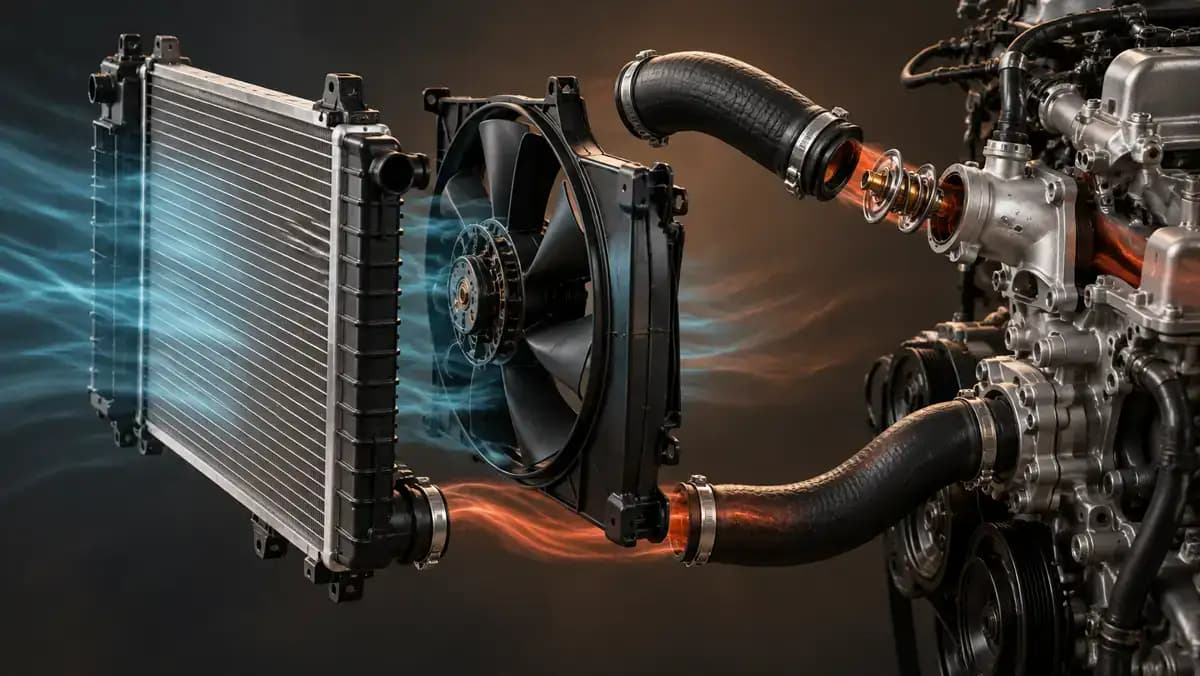
Illustration: AI-generated for AI4Car; a generic conceptual view, not a photograph of the reported vehicle or a manufacturer’s diagram. Content and licensing policy.
Was this useful?
Discussion
Share what you checked, what changed, and which vehicle you drive. Up to 10 comments and replies per account in 24 hours.
Loading discussion…