
A useful symptom
A 2019 Honda Odyssey owner described A/C that cooled well while moving but lost cooling at idle. The question asked what should be checked before paying for a refrigerant evacuation and recharge. The discussion offers possible checks; it does not report which repair ultimately solved this vehicle.
What changes when the car stops
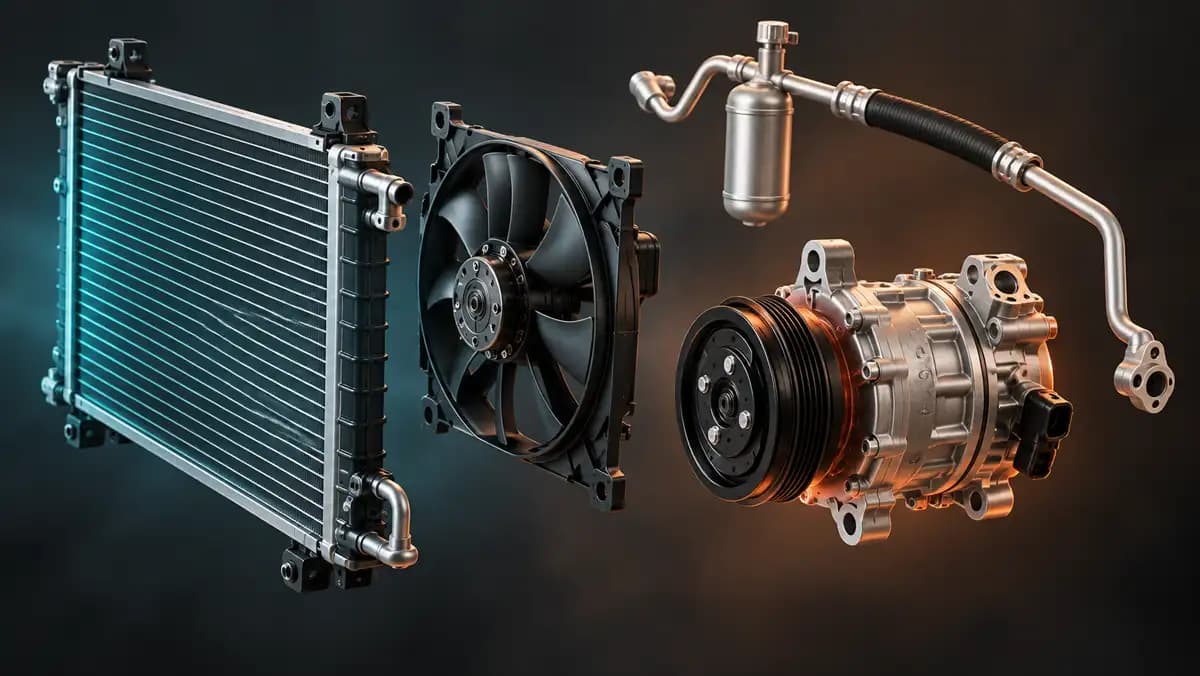
The condenser must release heat to outside air. While driving, road speed pushes air through it. At idle, one or more fans normally provide airflow. That makes fan operation, blocked fins and system pressures more informative than automatically assuming the refrigerant is low. Compressor performance at low speed can also matter.
Observe before replacing parts
- Compare vent temperature at idle and during driving under similar conditions.
- With the A/C requested, have a technician check whether the correct fans operate and whether condenser airflow is obstructed. Fans can start unexpectedly; keep hands and tools clear.
- If airflow is normal, request proper A/C system measurements and leak diagnosis before authorizing a recharge. Pressures must be interpreted in context, with the correct refrigerant and equipment.
The takeaway
The community suggested several explanations, especially lack of airflow at a standstill. None was proven in the original thread. This is a good example of turning a precise symptom into a shorter diagnostic path without pretending that a single symptom identifies a failed part.
Community discussion · outcome not verified
For information, not a diagnosis or repair instruction. A reported result may not apply to your car. Consult the manufacturer's guidance and a qualified technician.
How to use this information
This is an editorial interpretation of a public discussion. Replies, votes and an accepted answer do not prove a diagnosis. An author-reported finding or repair has not been independently verified by AI4Car. Illustrations are conceptual. Read the content limitations.
Credits & reuse
AI-assisted adaptation by AI4Car of the contributions below on Motor Vehicle Maintenance & Repair Stack Exchange. We shortened and reorganized the discussion, paraphrased its text and added educational context. These are reported experiences, not independently verified repairs. The contributors do not endorse AI4Car.
- Question: A/C not cold when idlingBy VioletHeart · CC BY-SA 4.0
- Answer: A/C not cold when idlingBy HandyHowie · CC BY-SA 4.0
- Answer: A/C not cold when idlingBy R.. GitHub STOP HELPING ICE · CC BY-SA 4.0
- Answer: A/C not cold when idlingBy GdD · CC BY-SA 4.0
This adapted article text, including AI4Car’s additions, is available under CC BY-SA 4.0. Reuse is permitted under that license with attribution, an indication of changes and ShareAlike. This notice excludes the separate illustration, site design and user comments. The source revision history remains available at Stack Exchange.
Illustration: AI-generated for AI4Car; a generic conceptual view, not a photograph of the reported vehicle or a manufacturer’s diagram. Content and licensing policy.
Was this useful?
Discussion
Share what you checked, what changed, and which vehicle you drive. Up to 10 comments and replies per account in 24 hours.
Loading discussion…